

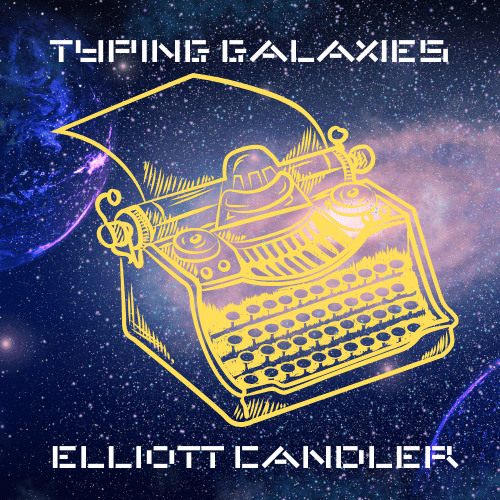
Hello, all! Today I will be showing you how you can build a basic science-fiction government for your worlds through these five steps!
Picture Credit
(Made with Canva)
Obviously, some more complicated or unique science fiction governments may not fit neatly into these five steps, but most typically will. This is a technique I find particularly useful in arranging my thoughts on what exactly this government is going to be like. I’m not going to say too much more, now – we’ll just jump straight into it.
(1) How Democratic/Autocratic Is The Government?
This first step is key. Democracy and authoritarianism are intrinsic to the creation of a basic science-fiction government. Scaling the democracy and autocracy of your government will outline much of the theme of your government and will highlight the government’s role in the story. You can have a democratic system such as in the Star Wars prequel trilogy, where we are introduced to the Galactic Republic; this highlighted the trilogy’s theme of the corruption and downfall of a democratic system as the Republic fell to be replaced by the Empire. Likewise, in the original trilogy, we are introduced to the authoritarian Galactic Empire, which enhances the theme of standing up against authority and injustice, as well as general themes of rebellion. In Dune as well, the authoritarian and hierarchical system serves to highlight class inequality and themes of the working class being easily dismissed by their higher-ups.
However, authoritarian governments do not necessarily have to be the antagonists – and democratic governments do not necessarily have to be the protagonists. For example, in my Mirror Squadron books, the Coalition of the Core Guilds – while democratic – is largely painted in a negative light. Despite its democratic advancements, it still contains remnants of the authoritarian regime which birthed it, so it is widely criticised.
Finally, determining if a government is democratic or autocratic (or a combination of the two) will set the foundations for you to begin exploring how this government works, how it is structured, and what groups and parties form it.
What Territory Does The Government Control, Directly Or Indirectly?
This is a relatively straightforward aspect of government-creation, but it is always valuable to know precisely what territories your government, well, governs. This can determine what cultures and groups will make up your government, as well as the potential influence your government has on the wider world. For example, look at Dune. Each of the Great Houses are essentially “mini-governments” of the wider Empire and where these Houses control is incredibly important. The titular planet of Dune – Arrakis – is especially important for determining the strength of these Houses’ mini-governments and the different groups that come under their influence – such as the Fremen.
This is quite a more obvious step than some of the others, but it is still – nonetheless – crucial. However, I will say no more, and we shall move onto the next step.
What Is The Government’s Basic Structure?
This step is one that may seem obvious on first glance – but so many miss it or don’t give it the necessary weight. Politics is an intrinsic part of any government; unless every person if subjugated to believe the exact same thing, people aren’t always going to agree on policies or power figures. In order for their to be any politics in your government – however great or small a part it will play in your story – you must have at least a basic government structure planned out. You can go into detail on this as much as you want/require. Use the previous questions as guidance as well.
I would suggest – at minimum – a single-line answer to each of the following questions:
- Who is the leader of the government/are the leaders of the government and how did they get that position?
- How is the territory of the government administrated?
- How is policy passed/how does your legislative branch function?
That should cover enough ground for you to be able to map out government basics. As illustrated before, the depth to which you want to explore this aspect of your government is up to you. I’m not going into huge detail, as it is up to you how much detail you put into this section. I will probably end up doing another article on this at some point, though.
What Groups Make Up Your Government And How Does This Affect The Government?
This is – again – quite a broad category which is largely up to your discretion as to how much attention you give it. I would suggest having at least a few distinct groups within your government – it’s good for conflict and for giving your world an aspect of complexity and realism.
Groups can be any combination of the following:
- Species
- Culture
- Religion
- Political Groups/Parties
- Class
- Other
I want to take this and apply it to the movie Bladerunner. In Bladerunner, the group system isn’t exactly super-complicated: it’s primarily divided between androids and humans, and this is the main focus of the story. This is great for a number of reasons: firstly, it provides a great source of conflict with android-human tensions; secondly, it gives the world layers of complexity, as we see androids are treated as lesser than humans; and thirdly, it provides a great source of theme, as the movie explores what it means to be human and whether this android-human divide stands up to scrutiny. Bladerunner is a great example of this technique, as it fully explores and exploits the potential of just a singular conflict.
If you are writing a political story, groups are just as important as basic government structure. They are something you will really have to go in depth on – think about motivations, sub-groups, all sorts. Again, I will probably write another article on this.
What Are The Foreign Relations Like?
Finally, we have foreign relations – an oft-missed step of government-creation. You should know briefly about your government’s relations with other governments in the vicinity; these relations will inform how the government acts and can also make your world feel bigger and entwined. Having two governments with no connections or relations (without necessary circumstances for that) just doesn’t make much sense.
Look at Lost Fleet, specifically, the first book, Dauntless. The book is centred on a war between two governments – the Syndics and the Alliance – this itself an example of how foreign relations can influence a story. However, I want to focus on another aspect: the Callas Republic. First, a brief disclaimer, I did not think Jack Campbell (the author) fleshed out the Callas Republic in this book nearly as well as he could have or, perhaps, should have. Still, it serves as an example of what I am talking about. By including the Callas Republic, Campbell broadened the horizons of his world beyond the Syndic-Alliance war and added nuance and complexity: the Callas Republic is allied to the Alliance, but that alliance needs to be maintained. This adds a further element of danger and potential conflict to the book.
Foreign relations are not the most important part of creating science-fiction governments, but I do really appreciate them when they are done right. They can broaden a world significantly and also provide great themes and political nuance to a story. I may or may not do an article exploring how to write foreign relations – depends if I feel there’s enough content to warrant a full post on it.
So there you have it: 5 Steps To Making Your Own Sci-Fi Government! I hope you guys enjoyed this post. Please like and subscribe for more – and to read those other posts I alluded to, which will be coming later.
MORE BLOG POSTS:
- (Previous) Fantastical Realms To Explore…At Your Fingertips!
- (Next) Structure of a Sci-Fi Government Pt I: The Legislative Branch Pt I
- Typing Galaxies Blog Homepage
LATEST POSTS:
- Screams Fade To Silence
 A brief flash fiction story… It happens at night – every night – when I am alone. I roll into bed, close my mind. Then cold prickles my back, and murderous thoughts ignite my brain. Invisible weights crush my skull. Lightning flares in my mind – a rolling thunderstorm of… Read more: Screams Fade To Silence
 - My Story To Five Novels
 What led me to writing five novels? What sparked my journey – and what obstacles have stood in my way since I began…? So, to preface this, I am a nineteen-year-old who has written five full-length novels and a feature-length screenplay. I have also written a plethora of short stories,… Read more: My Story To Five Novels
 - Reavers #16: Powers Of The Ov’l Pt IV
 THE “FEAR AND HATE” ARC CONTINUES… George pulled on his orange gown, tying the string firmly around his waist. ‘This time, I will do it.’ Fi nodded and smiled warmly. ‘I hope so, George.’ Dressed in a silver dress, adorned with bushels of dark flowers, she looked as beautiful as… Read more: Reavers #16: Powers Of The Ov’l Pt IV
 - Reavers #15: Powers Of The Ov’l Pt IIITHE “FEAR AND HATE” ARC CONTINUES… ‘The Artefact Taskforce has come back,’ said Reuben as he sat next to Hugh on the steps leading up to the prison block. He rested his hands on his knees and sighed. His blue eyes glittered brightly, but they were tired. The drama with… Read more: Reavers #15: Powers Of The Ov’l Pt III
- Reavers #14: Powers Of The Ov’l Pt IITHE “FEAR AND HATE” ARC CONTINUES… The tentacled horde hurtled towards them in perfect silence, red eyes glittering with the fiery hatred of the Devil. The light of consciousness illumined them, sending lines of silver rippling over their bodies. George’s chest turned to ice; the air froze itself in his… Read more: Reavers #14: Powers Of The Ov’l Pt II
What are you still doing here? It’s over. Go home, back to your keyboard: there’s stories to write and galaxies to type!


 Typing Galaxies
Leave a comment