

What led me to writing five novels? What sparked my journey – and what obstacles have stood in my way since I began…?
Picture Credit
(Made with Canva)
So, to preface this, I am a nineteen-year-old who has written five full-length novels and a feature-length screenplay. I have also written a plethora of short stories, half-finished manuscripts, and other assorted works (including some comics!). Many of these are available to view on this website (Typing Galaxies), including Reavers and Wildwater – Rise of the Orr’un. This post is a bit of a fun post for me: I will be looking back over the last five years of my writing journey. To me in the future, I hope this is an interesting look back at how far you’ve come!
THE EARLY HISTORY
So, before novels, before Mirror Squadron, before Reavers, and before the Jadebanes (not a reference you guys will get – yet!), I was a young kid who loved to write. I wrote loads. My favourite classwork was when the teachers gave us opportunities to write our own works in class. Through primary school and very early secondary school, I wrote such seminal classics as Death of the Scoths, The Monster Cup, and The Twins. I call them “classics” with both amusement and fondness: these stories were truly terrible (I was only a little kid!), but they were the foundations on which I developed my skills. I wouldn’t be even half the writer I am now without those very early mishaps. Through them, I practiced harnessing my imagination, expanding my vocabulary, and telling a story people actually wanted to read.
(The biggest standout from this era though was my winning a Year 7 poetry competition at my school. However, I am not entirely convinced I wasn’t the only participant…)
Despite my early writing prowess, as my school years continued, the time I spent writing diminished. I was already writing less by Year 6 and even less by Year 7; by Year 8, I had stopped writing entirely. It would not be for a few years before I finally started again…
THE FIRST ATTEMPT
COVID happened in 2019, when I was still in Year 9. I wiled away lockdown as any other teenager did: playing video games and watching television. But as the lockdown progressed, this changed.
In 2019, The Witcher television series starring Henry Cavill was released on Netflix – and I was hooked. I became invested in the world and lore through the third video-game and the TTRPG. Eventually, this developed in a burning passion, and I wanted to write something just like it. I developed the Jadebanes, witchers in all but name; they would later be developed into a fleshed-out and original concept over the years, but these first incarnations had none of that development.
The first character for my stories was a Jadebane called Elwaard Hrald with a purple eye that marked him as tainted by evil. He was gruff, rude, and of course, very morally grey (or what I considered to be morally grey at the time). Who can forget his cauterising sword (see: lightsaber) or his noble horse Astontis, my equivalent for Roach. I wrote a short story featuring him and a wizard called Milbin Orron as they solved a case of odd murders at a village in a swamp. The story was decently-structured – but the writing was absolutely horrible. I have – unfortunately – since lost the original copy of this story. However, parts of it can still be found in the half-finished Duran Saga novel.
Yes. You, see, I decided to expand Elwaard’s story into a dark fantasy novel, set in the world of Gornathoria. This, I do still have a copy of. Elwaard and Milbin journeyed through the swamp, fighting a fog spirit and escaping from cannibalistic dwarves. They later wound up at village where they befriended a warrior – and together with a faction known as the Thunder Enclave (completely original, I promise), they battled an orc invasion of the village. Elwaard’s story never got further than that, though he has appeared in a few of my short works as a grizzled Jadebane veteran (only without his evil eye, his cauterising sword, or anything that would make him stand out at all; some stories don’t even have his horse!).
However, this was only half the story. The other half of my novel followed a second fellow, an elf warrior named Dragonheart (so named because I thought it sounded cool and mysterious). His story followed him fighting some weird, bubble-headed cursed humans, running away from T-rexes, and befriending a group of wolf-riding elves (who would almost all eventually die because of him).
I had planned for Dragonheart to join Elwaard on his quest, but the two never got to meet. Their unfinished story stands at a monumental forty-thousand words long – monumental when you realise I was only fifteen when I wrote it – but I have vowed to finish it. One way or another, the Duran Saga will be published.
THE COMPLETED NOVEL
After Elwaard, Dragonheart, and The Duran Saga, I didn’t write for nearly a year. However, in this time, I had become introduced to the books and comics of the Star Wars Expanded Universe (now since rebranded to “Legends”). I had loved Star Wars my whole life – and still do – and after the disappointment of the sequel trilogy, I turned to the old media, beginningwith the Rogue Squadron comics.
These comics are not hugely famous or reverred amongst the fandom – but I loved them. More importantly, they opened me up to a new universe of Star Wars, with an entire galaxy to explore. I read through a few novels in the timeline (Han Solo Trilogy, Shadows of the Empire, and The Truce At Bakura), but it was the X-Wing books which really called to me. For one, as they were written by the same guy (Michael Stackpole), the X-Wing books and Rogue Squadron comics tied into each other quite nicely. The books felt very much like a continuation of the comics, despite having being written before them.
I read the first book – X-Wing: Rogue Squadron – and loved it. “Top Gun in space” is how it’s often described – an apt comparison. As someone who enjoyed both Star Wars and Top Gun, I was hooked. It was after reading the second book, Wedge’s Gamble, that I was so inspired I decided to write my own X-Wing battle. Instead, I changed it into my own universe. I created my own Rogue Squadron – Mirror Squadron – and combined the personalities of Wedge Antilles and Corran Horn into Captain Benned Cotau. I even had my own Bror Jace/Iceman rival in Villo Pyramn. The New Republic became the “Coalition of the Core Guilds” and the Empire became the “Myzoan Oligarchy.” I even designed my own starfighters.
I wrote a huge, sweeping battle, culminating in a victory for the Coalition over the Myzoans. It was pretty bad – but fifteen year old me was convinced it was peak storytelling: my characters (Benned especially) were all flat and bland archetypes, my worldbuilding was painfully shallow and almost nonexistent, and the battle was very messy and convoluted. However, what it did have, despite being little more than a Star Wars reskin, was heart and an author who truly loved what he was writing.
I believe the original battle has been lost, now, but it’s legacy is still enduring. I decided to expand it into a novel – Mirror Squadron: Conspiracy. It was a space opera/sci-fi story that followed Benned and Mirror Squadron unveiling a Myzoan plot on the desert world of Fortunesca – involving Benned’s own brother. While the original drafts of Conspiracy are lost, I did have the forethought to save some early drafts. Over the last five years, the novel has been edited and reworked a thousand times. It is called Mirror Squadron – Liberty’s War now, but don’t let that fool you: it is still terrible.
However, young me was convinced I had written a modern masterpiece. As such, I decided to write, not one, but two sequels. (One of them was technically the second part of Conspiracy – but it still counts!) I also planned an entire shared universe (which I’m still working on.)
THE (TERRIBLE) SEQUELS
The first sequel to Conspiracy was Roots of Corruption. It marked the conclusion of the plot that was begun in Conspiracy. Originally, Conspiracy had been 150,000 words long. (It’s modern counterpart, Liberty’s War, currently stands at 100,000 words). I managed to cut over 40,000 words by turning the last portion into its own novel. With a final confrontation with the big bad (Benned’s brother), Conspiracy ended on a cliffhanger with Benned being kidnapped. Roots of Corruption followed the squadron’s efforts to get him back. There are a few things I really liked about Roots of Corruption compared to Conspiracy: the worldbuilding felt more lived-in and less sterile; Benned’s love interest became an actual character, not just a pretty piece of cardboard; and the final battle was great. Fun fact: I planned that final battle with my mate JJ in GCSE Chemistry when we were both supposed to be revising for our exams (we both did great anyway, so no harm done there).
Roots of Corruption also had me returning to my roots (haha – get it?) in that my story got markedly darker – much like the original stories with Elwaard the Jadebane had been. However, this time I was a bit more mature. In The Duran Saga, I had completely misinterpreted “dark fantasy” as “fantasy with loads of death”; as such, I had added in completely nonsensical, almost laughable scenes including my main antagonist (a village lord) killing Elwaard’s friends brutally, then lining up every man, woman, and child in the village and slitting their throats. Yeah. The less said about my early “dark fantasy” writing, the better.
Roots of Corruption also added elements of politics – ripped off from the X-Wing books. Instead of trying to take the galactic capital of Coruscant, they were going to attack the Myzoan homeworld of Myzoa. There was also added political tensions within the Coalition, which had been hinted at in Conspiracy but became important in Roots of Corruption (especially in the final battle). There was also some politics hinted at on Decran (the main planet the novel was set on), though this was very shallow.
After Roots of Corruption came Fires of Uil – an interesting book to say the least. Firstly, one of my favourite characters from the first book was resurrected, with no explanation whatsoever. Additionally, the tone took a serious turn from space opera/military sci-fi to a fantasy epic, which would have worked had I alluded to it better in previous books. This book, though, was seminal for two reasons: developing Benned’s character into more than just a stock archetype and for developing the magic lore of the universe. Aside from that…it’s pretty awful, even compared to its predecessors.
I mentioned before that Conspiracy later became Liberty’s War – a work so different from the original it probably counts as its own novel (not that I count it). The chronology of Liberty’s War does not fit with the canon established in Conspiracy’s sequels; I haven’t yet got round to rewriting them to fit.
That about sums up the early history of my Mirror Squadron books. These three novels (four, if you count Conspiracy and Liberty’s War as separate) were horrible and largely unpublishable (though I tried). It wasn’t until my next novel when I began writing what I deemed as “publishable” novels. Mirror Squadron will return later in the blog post, but for now we turn to:
HESSI SOLM AND THE NOVEL I AM MOST PROUD OF
I started writing Belief – The Tale Of Hessi Solm a couple of years ago, a little after finishing Fires of Uil. At the time, I was intensely rewriting Conspiracy into Liberty’s War, so I couldn’t give the story the focus it deserved.
Belief (now retitled to Only Queens Have Black Scales in my last rewrite) follows Hessi Solm as she navigates the political and social dynamics of the Monarchical Territories of Rideron. It was a spin-off from Mirror Squadron: Conspiracy, based on the character backstory of Lhu Tah – one of the Rideronian pilots in the squadron. It has lots of thematic depth and some of my favourite worldbuilding that I’ve written: I was able to weave my love for space opera, politics, philosophy, and folklore into one brilliant and coherent setting.
However, most importantly, Belief was a standalone story.
I had originally written Mirror Squadron with the intention of writing a series – but had failed to appreciate the skill level writing a series necessitates. I wasn’t even able to write a coherent standalone story – yet I expected to write a series full of them?
In short, that was what made Belief such a cornerstone in my writing journey: finally, I learned how to write a story, rather than just throw words and characters on a page. I knew the mechanics of writing well from a young age – my early stories are very well-written – but I did not understand storytelling. That was the most valuable lesson Hessi and the Rideronians taught me.
I am currently rewriting this book so that it is publisher-ready – and so far, I am amazed at just how good it already is. And the fact that I now have an opportunity to make it even better? That’s why I love revision so much.
FINALLY, THE PREQUEL THAT ISN’T A PREQUEL
I finished writing my last and sixth novel just under a month ago. Heroes’ Crucible is the next Mirror Squadron book – but not in the way you think.
As you can probably guess from the heading, it is a prequel. However, it is a prequel in the way A New Hope is a prequel to The Empire Strikes Back in that it’s just the book before Conspiracy/Liberty’s War. It follows the same cast of characters, but on a wildly different journey. It also steals a lot of its character arcs from Liberty’s War and shuffles the chronology massively, conflicting with the canon of all my original stories. That was why I held off rewriting my sequels to Conspiracy: with the writing of Heroes’ Crucible, I would have to rewrite them again anyway.
Heroes’ Crucible is my most publishable book: its story is solidly structured and the character arcs are coherent and make sense. With a few minor tweaks, it will be ready to send to publishers.
The only reason it isn’t my favourite of my novels – like Belief is – is because it does feel formulaic. It’s almost like I have uncovered the recipe for writing and structuring a story; now that I’ve seen it, I can’t forget it.
I also don’t like that it feels lacking in depth in some areas. Some parts really sing, but some parts do feel very shallow. But I hope to use what I’ve learned writing Belief here, to deepen my worldbuilding and themes – without overloading the reader.
CONCLUSION
So that’s how I wrote my five novels! In this time I also wrote numerous short works (which will soon be published on this website, I’ve decided), a Scorsese-inspired gangster screenplay, and many other unfinished manuscripts I hope to finish. There is one I am especially passionate about – Attack of the Wild – which I wrote after a trip to Whitby on the Yorkshire coast. I stared out to sea at the seagulls and daydreamed about them having machine-guns…
I will leave it at that – you’ll just have to read it when I’m finished to learn more!
UPDATE 1 (23/08/2026)
Just a quick update on where my writing is at now! I have since written another novel, A Killer’s Remorse, very cyberpunk, very gritty, and very Bladerunner-esque. Additionally, Belief has been renamed to Only Queens Have Black Scales, and Heroes’ Crucible has been named to the less melodramatic, Stone Winds. I am currently working on a fantasy sword-and-sorcery novel called The Balefire Lust. It is described as “The Witcher meets Kill Bill“, and I am really excited to finish it!
—
If you enjoyed this post, please be sure to like and leave a comment below. All support is gladly appreciated!
Additionally, if you would like to keep up to date with this website and my writing, please subscribe below. Follow me on Wattpad (SecretWriter575) and on Instagram (writer_ec_23).
MORE FROM TYPING GALAXIES:
- (Previous) Perfecting Prose
- Typing Galaxies Homepage
LATEST POSTS:
- The Seven
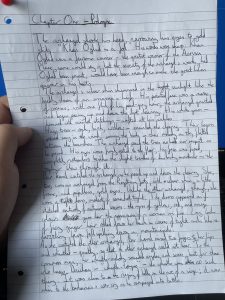 A random story (or, part of a story) I found… I was just randomly flipping through a notebook of mine, when I came across this little story from a year or two ago. I haven’t read or edited it; this is me literally transcribing word for word and discovering (the… Read more: The Seven
 - Wildwater (Amended Version)
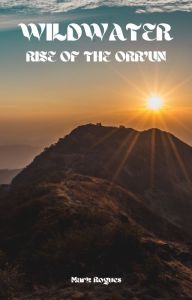 Full Amended Version of Wildwater: Rise of the Orr’un… Please see below for the Amended Version of this story. The story itself is largely unchanged from the original version, only with additional references to the Sovenian Dynasty, the Southern Fringe, and the Milithron Galaxy in which the story is set.… Read more: Wildwater (Amended Version)
 - The Tyranny of Unkillable Gods
 The only thing an Angel fears is Death… This is the first of my short stories intended to expand on the world established in another story, Corruption Of Mortality. My writer-friend and I are planning a short story anthology, and this will be one of my contributions to the anthology.… Read more: The Tyranny of Unkillable Gods
 - Withdrawal
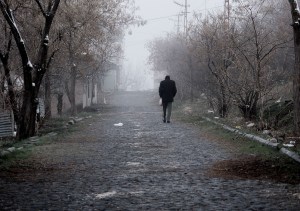 A semi-autobiographical look at love, heartbreak, and escaping reality through fiction… So, a girl I was talking to asked me to write a story about love. My experiences of love, and what I wanted out of love. The result was the story you see below. Unfortunately, things didn’t work out,… Read more: Withdrawal
 - Anna
 Without the protection of the rusalki water spirits, one woman stands alone against the Flame of Asgeoth… So, I wrote “Anna” for an ex, some months ago, as a present. I printed it out, put it in a manilla envelope, and gave it to her in a giftbag with some… Read more: Anna
 - Starfighters of Hunlah
 Starfighters battle it out above the red dustplains of Hunlah… “Starfighters of Hunlah” is the now-deleted first chapter of my fifth novel, Stone Winds. It was cut for pacing issues, but I think it works quite well on its own, as a quasi-prologue to Stone Winds. Enjoy! — The D-3… Read more: Starfighters of Hunlah
What are you still doing here? It’s over. Go home, back to your keyboard: there’s stories to write and galaxies to type!
One response to “My Story To Five Novels”
-

[…] (Next) My Story To Five Novels […]
LikeLike


Leave a Reply